
Nobody Is Born Broken
Children don't become who they are by choice. They become who the world teaches them to be.

We Were All Once the Same
Every child enters the world the same way.
No opinions. No hatred. No jealousy. No fear of being abandoned. No belief that they are "too much" or "not enough." They don't know what success means or failure feels like. They don't know what love should look like because they haven't experienced it yet.
They simply exist.
A newborn doesn't remember yesterday because there wasn't one. Their mind is like a blank page, waiting for the world to write on it. Every smile, every hug, every harsh word, every ignored cry, every celebration, every disappointment—these become the sentences that shape who they are.
Children don't become who they are by magic. They become who they are through experience.
The environment around a child is their first teacher. Before school, before books, before society, there are parents, siblings, relatives, neighbors, and the home itself. A child watches everything. They notice more than adults realize.
They learn what love looks like by watching how people treat them.
They learn what respect feels like by the way adults speak to them.
They learn whether their emotions matter by seeing how people respond when they cry.
Every experience becomes a lesson, even when nobody is trying to teach one.
A child who is comforted after falling learns that asking for help is okay.
A child who is laughed at for crying learns that emotions are embarrassing.
A child who is constantly compared learns that love has to be earned.
None of these lessons are written in textbooks, yet they stay with us for years.
This is why two children can be born equally innocent but grow into completely different adults.
It isn't because one child was born "good" and the other was born "bad."
Life simply wrote different stories on their blank pages.
Sometimes those stories are beautiful.
Sometimes they leave scars.
Take the example of an older sibling.
When a younger child is born, life naturally changes. The baby needs more care, more attention, more protection. Parents are exhausted, busy, and often overwhelmed. None of this makes them bad people.
But from the older child's perspective, something feels different.
Yesterday, they were the center of someone's world.
Today, they feel invisible.
They don't understand diapers, responsibilities, or sleep deprivation. They only understand feelings. They begin asking themselves questions they are too young to answer.
"Did I do something wrong?"
"Why don't they spend time with me anymore?"
"Am I not important now?"
No one may have ever said those words aloud.
But children don't only listen to words.
They interpret actions.
The older child may slowly stop asking for attention because they believe they are asking for too much. They become "the mature one." They help with chores, hide their emotions, and learn not to disturb anyone.
Everyone praises them for growing up so fast.
What many people don't realize is that children aren't supposed to grow up that fast.
Sometimes maturity isn't a gift.
Sometimes it's survival.
Years later, that same child may struggle to express emotions, ask for help, or believe they deserve attention. Ironically, after being forced to act older than their age for years, they may later behave in ways people call "immature."
But maybe they are simply trying to experience the childhood they never truly had.
Now look at another family.
The younger sibling grows up differently.
The parents have already experienced raising one child. They may become less involved, assuming the younger one will "figure things out." Sometimes the younger child is constantly compared to the older one. Sometimes they are forgotten because everyone believes they're fine.
"They're the easy child."
"They'll manage."
Those words sound harmless.
But repeatedly feeling unnoticed can quietly teach a child that they don't matter enough to ask for anything.
Again, nobody intended to hurt them.
But intentions don't always erase consequences.
Children don't remember what adults meant.
They remember how adults made them feel.
That feeling becomes part of who they are.
This isn't only about siblings.
The same idea applies everywhere.
A child who grows up hearing, "You're so smart," may become afraid of failure because they think making mistakes means they aren't smart anymore.
A child who constantly hears, "Why can't you be like someone else?" grows up believing they will never be enough.
A child who is loved only when they achieve something may spend their entire adult life chasing success just to feel worthy.
On the other hand, a child who is encouraged after making mistakes learns resilience.
A child whose feelings are respected learns empathy.
A child who feels safe learns confidence.
The difference often isn't the child.
It's the environment.
This doesn't mean parents are villains.
Parenting is one of the hardest jobs anyone can have, and there is no perfect guidebook. Parents make mistakes because they are human. Many are carrying wounds from their own childhoods without even realizing it. Sometimes they repeat the only parenting they ever experienced.
Pain can travel through generations until someone decides to stop passing it on.
That is why people often say, "Heal yourself before raising someone else."
Because children don't only inherit eye color or facial features.
Sometimes they inherit fears, insecurities, and emotional patterns.
And yet, despite all this, people can heal.
The experiences that shape us are powerful, but they do not have to define us forever. Understanding where our behaviors come from gives us the chance to choose something different.
The child who felt ignored can learn that they deserve love without earning it.
The child who felt forgotten can learn that their voice matters.
The child who believed they were never enough can slowly discover that they always were.
Healing is difficult because it asks adults to comfort the child inside them that nobody else noticed.
But it is possible.
Perhaps the most important thing we can remember is this:
Every difficult adult was once a child trying to understand the world.
Some were taught that love had conditions.
Some were taught that feelings were weaknesses.
Some were taught that silence was safer than honesty.
Before judging who someone became, it is worth asking what happened to them while they were growing.
This does not excuse harmful behavior. Everyone is responsible for their actions as adults. But understanding the roots of those actions allows us to respond with wisdom instead of only judgment.
Maybe that is why the saying feels so true:
Every child deserves loving, prepared parents, but not every adult is ready to become a parent.
Children don't need perfect parents.
They need adults who are willing to listen, learn, apologize when they're wrong, and make their home feel safe enough for a child to simply be a child.
Because in the end, no one is born believing they are broken.
Someone—or something—taught them that.
And perhaps, with enough understanding, patience, and love, they can learn something different.
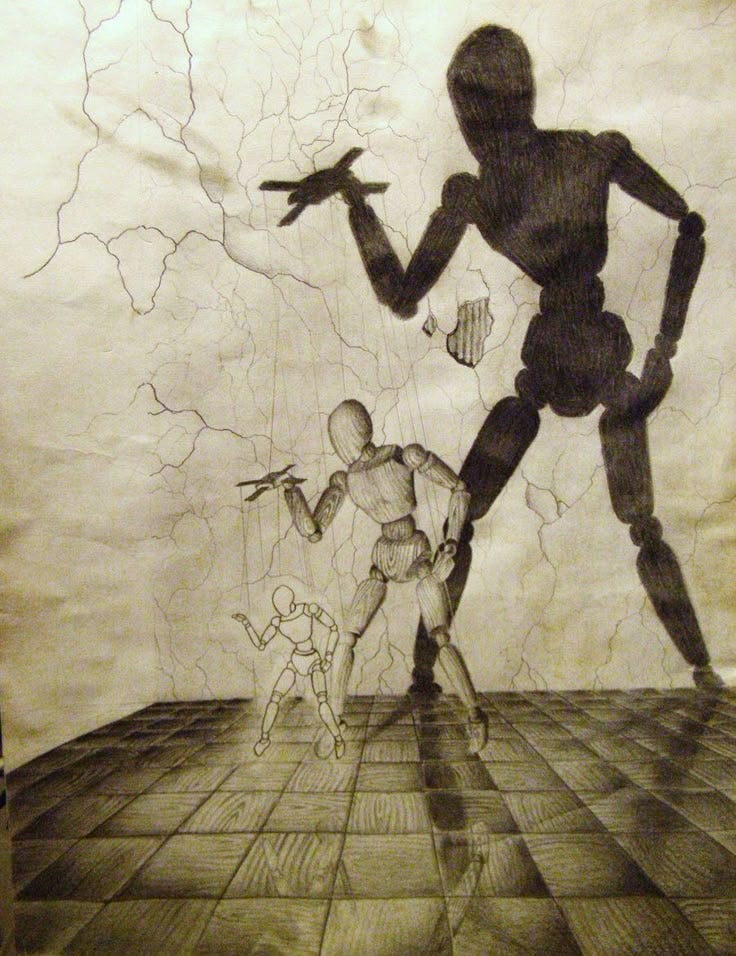
What makes your point so compelling is that our experiences don't just influence who we become, they can either nurture or constrain the person we already have the potential to be. Fortunately, as you concluded, awareness gives us the opportunity to rewrite parts of that story.